
Discover how Dubai’s booming tourism industry drives its real estate market, creating high demand for properties and offering lucrative investment opportunities.
Dubai’s real estate market has grown alongside its rise as one of the world’s leading tourism destinations. From luxury resorts and island developments to branded residences and serviced apartments, tourism plays a critical role in shaping property demand, rental yields, and long-term value across the city.
Understanding the relationship between tourism growth and real estate performance is key for investors looking to capitalise on Dubai’s expanding property market.
See also: Investing in Dubai: A Lucrative Opportunity
The Rise of Tourism in Dubai
Dubai has firmly positioned itself as a global tourism powerhouse. The city consistently attracts millions of visitors each year, drawn by its safety, world-class infrastructure, luxury experiences, and year-round events calendar.
Before the global pandemic, Dubai welcomed over 16 million international visitors annually. While travel slowed temporarily, the city rebounded faster than most global destinations. By 2022, tourist arrivals had crossed 12 million, and today Dubai continues to break new tourism records, supported by:
Investor- and tourist-friendly visa policies
Iconic landmarks and luxury destinations
Strong air connectivity
Global events, exhibitions, and festivals
This sustained tourism momentum directly fuels demand for real estate across hospitality-driven and lifestyle-focused locations.
How Tourism Affects Dubai’s Real Estate
Tourism creates consistent demand for both short-term and long-term accommodation, making it one of the strongest demand drivers in Dubai’s property market.
Key real estate segments influenced by tourism include:
Hotels and branded residences
Serviced apartments
Waterfront and island properties
Short-term rental homes
As tourism volumes rise, developers respond by launching high-quality, experience-led projects that appeal to visitors, investors, and end-users alike.
At the same time, Dubai’s tourism-led economic growth attracts expatriates, entrepreneurs, and professionals – increasing demand for long-term residential rentals and owner-occupied homes.
Key Tourism Destinations Driving Real Estate Value in Dubai
Dubai offers a wide array of attractions, contributing to its tourism appeal. Here are some key highlights:
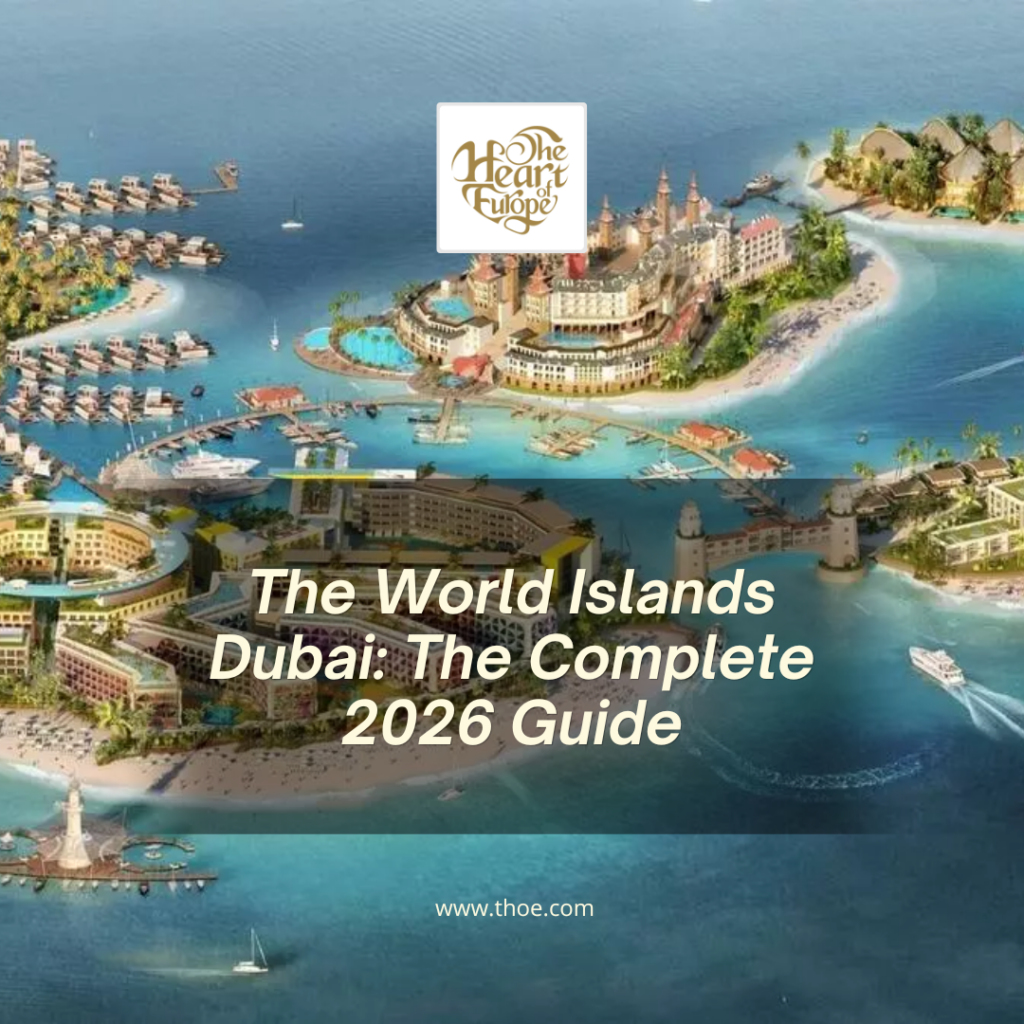
The Heart of Europe in The World Islands
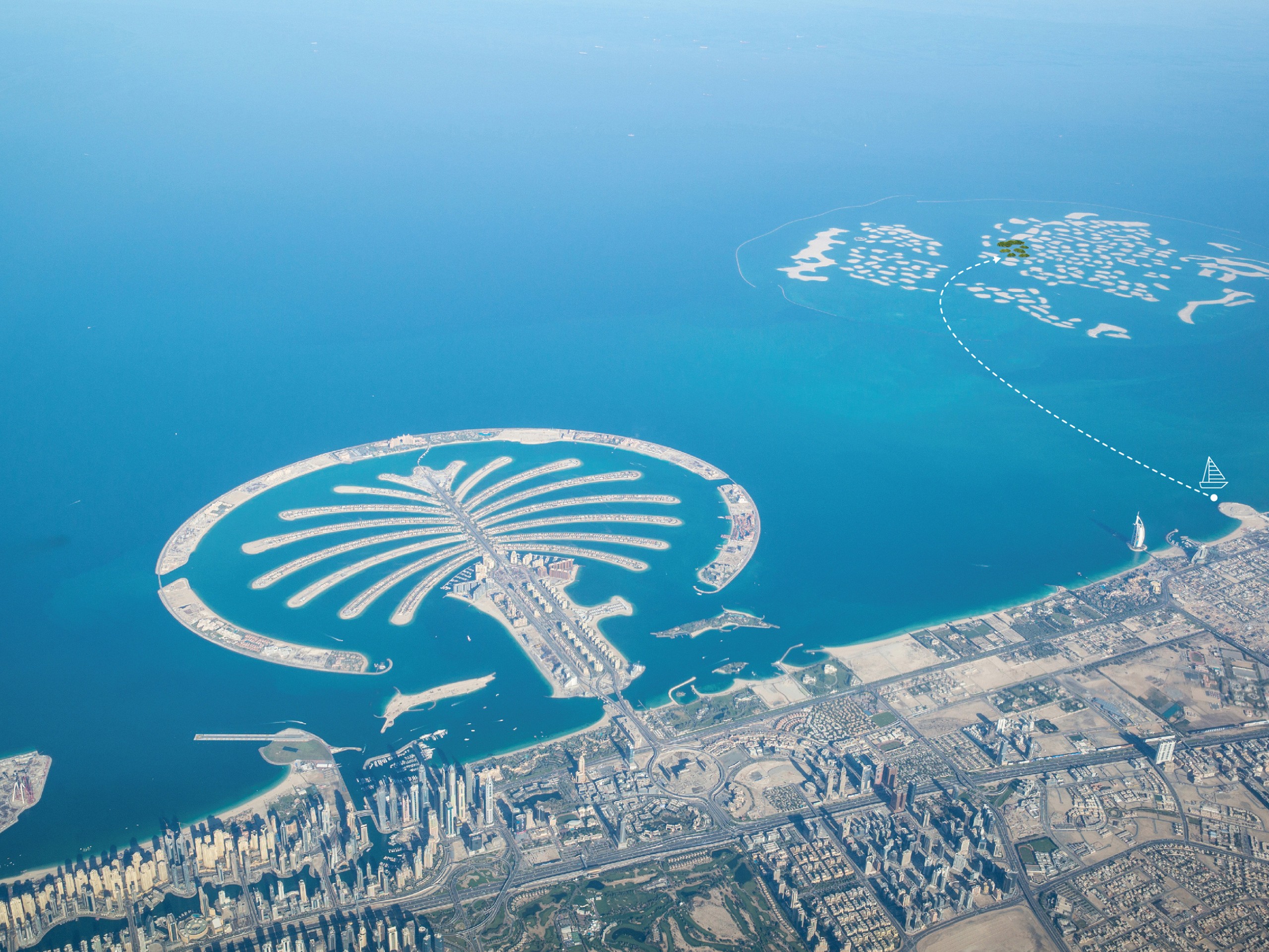
The World Islands is an ambitious project comprising around 300 islands representing different countries. The Heart of Europe, an artificial archipelago of six isles within The World project, captures European culture.
Featuring beachfront villas, branded residences, floating villas with underwater rooms, and hospitality-led experiences, the destination attracts:
International tourists
High-net-worth investors
Lifestyle-focused buyers
Sustainability-driven design and innovative marine engineering further enhance long-term value, positioning the area as a premium real estate hotspot.
Palm Jumeirah
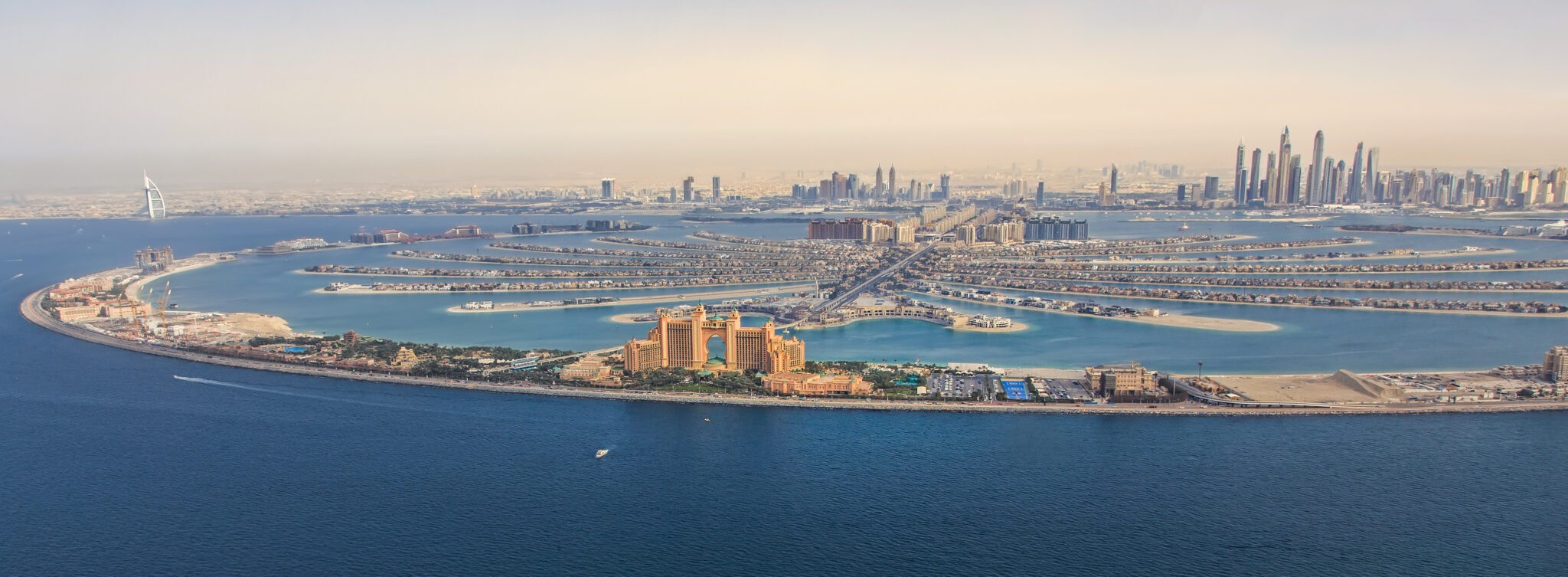
Palm Jumeirah, a renowned manmade island, is famous for its luxury resorts, hotels, and entertainment options. This area offers a quintessential luxury experience and showcases Dubai’s penchant for extravagant construction projects.
See also: The Future of Island Living: Trends and Predictions
Burj Khalifa
The Burj Khalifa, the world’s tallest building, is a major tourist magnet. Its iconic status and the surrounding area have seen a significant rise in real estate values, attracting high-net-worth individuals seeking premier accommodations.
Dubai Mall
Dubai Mall, one of the largest malls globally, is a top city attraction. Its popularity has spurred the development of residential and commercial properties in its vicinity.
Why Tourism Makes Dubai a Strong Real Estate Investment Market
Tourism strengthens Dubai’s real estate ecosystem by:
Reducing vacancy risks
Supporting high rental yields
Encouraging long-term infrastructure investment
Attracting global capital
As Dubai continues to evolve as a lifestyle, business, and leisure hub, tourism-backed real estate assets remain among the most resilient and future-ready investment options.
Final Thoughts
Dubai’s tourism and real estate sectors are deeply interconnected. As tourism continues to grow, so does demand for high-quality properties across the city’s most desirable locations.
For investors seeking stable income, strong appreciation, and global exposure, tourism-driven real estate in Dubai offers compelling long-term opportunities.
Follow us on Facebook, Instagram, LinkedIn, X, andYouTube for latest updates.
FAQs

Apeksha Udeshi is a Senior Copywriter at Kleindienst Group, bringing 15+ years of hands-on experience in Dubai’s real estate and marketing sectors.
She specializes in crafting authoritative real estate content focused on investment, luxury, hospitality, and sustainability trends within the UAE.
With a Master’s in Marketing and a Bachelor’s in Psychology, her background uniquely positions her to translate complex property insights into clear, actionable information for investors and homebuyers.
Her work spans collaborations with major industry leaders and international brands, and her content is trusted by real estate audiences for its depth, accuracy, and relevance.